Estate Planning & Probate

At Deming Law, we recognize that comprehensive estate planning extends far beyond the execution of documents; it is an essential foundation for wealth preservation and ensuring a seamless transition of assets to your beneficiaries. Whether your goals involve the distribution of assets through the establishment of a trust or the implementation of an asset protection structure, we provide tailored legal solutions to meet each client's specific objectives.
When a loved one passes, we assist personal representatives, referred to as executors in other jurisdictions, through every step of Florida’s probate process to ensure the proper administration and distribution of the estate. Our ancillary probate services assist out-of-state attorneys and estate representatives with administration regarding a decedent's property and assets located within the State of Florida. We also work with attorneys and accountants in Canada, providing the necessary infrastructure for our clients' cross-border needs.
Asset Protection
Asset protection is the legal process of arranging your personal and business affairs so that your assets are shielded from risk. In today’s world, lawsuits, creditors, and unexpected financial challenges can put your hard earned assets at risk. The best time to plan is before a problem arises. Asset protection structures only work properly if set up in advance. Effective planning makes it much more difficult for creditors or lawsuits to reach your property. Asset protection and estate planning are deeply intertwined. While estate planning manages who receives your wealth, asset protection actively shields those resources from potential lawsuits, and creditors. Together, they safeguard your legacy while ensuring your assets smoothly transition to your beneficiaries. At Deming Law, we protect wealth, preserve legacies, and secure peace of mind.
We are often asked about asset protection and how it works. The asset protection structures we build incorporate layered business entities and trusts to shield your wealth. To answer some of these questions, we have put together a hypothetical scenario below to demonstrate how these advanced legal frameworks operate in practice and help you better understand what is involved in protecting your assets. We build asset protection structures for individuals, families, business owners, real estate, investments, and other ownership interests. Please read this entire page; the example is divided into parts to highlight each structural layer.
This information is for educational purposes only, it does not constitute legal advice. Every individual has unique circumstances and what works in this example may not be appropriate for you. Please consult an attorney. There are important consequences to consider when deciding the best course of action for you.This information is not intended to be used for any illegal purpose.

Asset Protection For Business Owners
We serve as a trusted legal partner to our business clients, from initial formation through every subsequent stage of growth, providing skilled counsel that protects their business assets and supports their long-term success. The structures we build segregate risk and limit liability by isolating valuable business assets from operational risks. This involves placing a risk-exposed business into a separate legal entity, entirely apart from the holding company that owns the assets. Whether it is a limited liability company, limited partnership, or corporation, we build business structures to meet our clients' objectives.
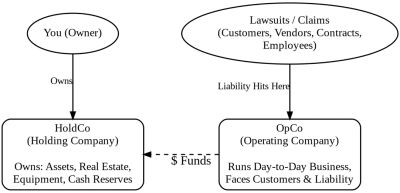
Entity layering is the legal structure implemented to achieve asset protection by utilizing multiple distinct business entities to separate a risk-exposed operating company from the holding company that owns the assets. This separates what you own from what you do.
Further, this framework isolates the revenue and profits of the operating company and strategically allocates those funds to the holding company. This is achieved by equity stripping the risk-facing operating company through financing agreements, loans, leases, liens, and operational agreements. As a result, these funds are shielded from potential liabilities and secured within the holding company. The operating company is adequately capitalized for operations, yet it remains thin in net equity to limit potential loss. Equity stripping in relation to real estate assets is discussed in the the example below.
By establishing a secure holding company to house your core assets that is separate and distinct from your operating company, which manages risk-facing business activities, you create robust legal barriers.
If an operating company faces a lawsuit or financial claim, these legal barriers limit liability to the operating company. This prevents the liability from climbing upward to jeopardize your holding company assets and the company's cash reserves, spreading sideways to your other business ventures, or threatening your personal assets. Implementing these structures in conjunction with trusts creates a comprehensive framework that shields business and personal wealth while fulfilling critical estate planning objectives.
Beyond building business structures, we draft the agreements needed to maintain entity separation and preserve asset protection benefits. This includes preparing leases for property, equipment, and other corporate holdings owned by the holding company that are utilized by the operating company. Properly documenting these legal intercompany arrangements is essential to reinforcing the liability shield between entities and withstanding scrutiny in the event of litigation or creditor claims.
Please read on to discover how these same asset protection structures apply to individuals, families, real estate, investments, and estate planning, while securing privacy by making the ownership of these assets invisible.
Asset Protection & Estate Planning Example
For Individuals, Families, Business Owners, Real Estate, & Investments
The Example Illustrated in Layers
This multi-layered asset protection strategy combines privacy-focused LLC structures to isolate liabilities and protect the asset while integrating trusts to facilitate the transfer of wealth. Harry and Wendy are a married couple planning to purchase a residential rental property. Like many of our clients, they want to protect their personal assets from potential claims and liabilities, invest in additional real estate over time, and establish an estate plan that efficiently transfers their wealth to their two children. Their assets include savings accounts, a well-funded investment portfolio of stocks and bonds, and their primary residence. The couple requests that their ownership remains confidential to protect their privacy.
Owning rental property involves risk. Every tenant, visitor, or contractor who steps onto the property is a potential liability. Harry and Wendy are also concerned that if they or one of their children gets into a car accident, without the right structure in place, a single lawsuit could put everything they own at risk. While insurance aims to cover policy limits, providers frequently seek ways to reduce payouts, exposing your assets to liability. This is exactly the kind of exposure Harry and Wendy want to avoid.
The Solution: A Layered Trust And LLC Structure
Every structure we build is tailored to each client’s specific objectives. This model provides a clear, linear illustration of what is possible. Below, we illustrate how we implement a layered trust and business entity structure to protect the couple's assets. This is a multi-layered asset protection and estate planning strategy that combines privacy, liability protection, and probate avoidance into one cohesive structure. In this example, the rental property is an asset and also a business. The following will illustrate how business and personal assets are protected, risk is contained, how we secure privacy for the couple by making ownership of their assets invisible to potential lawsuits, creditors, searches, and the public.
Whether you are an individual, a family, or a business owner, the example below will help you better understand the process of how we can protect your wealth. Additional strategies are available to achieve your objectives, including alternative business entities, trusts, and configurations. Please don’t hesitate to schedule a consultation appointment, we look forward to building the right structure for you.
Core Objectives
• Build a layered trust and entity structure to protect assets
• Shield the couple and their assets from liability
• Protect privacy by making ownership invisible
• Maintain a well documented, legally defensible entity framework
• Create an estate plan that transfers wealth to their children
• Create a structure that deters potential lawsuits and creditors from pursuing litigation
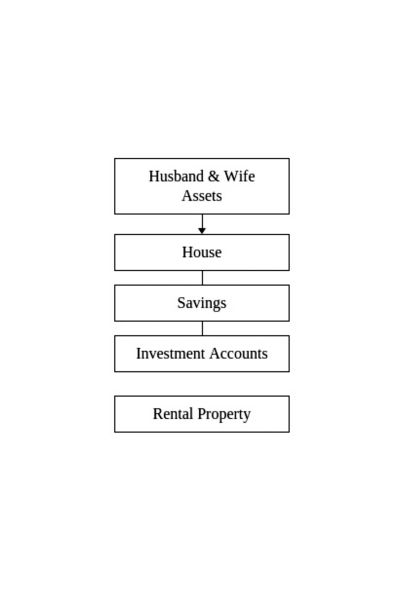
The Rental Property Purchase
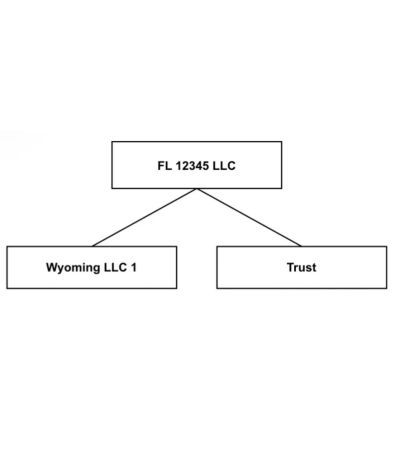
The objective is to purchase a rental property using a Florida LLC. This places the LLC on the property deed instead of the couple's personal names. To maintain strict privacy, the Florida LLC must be structured correctly. First, an anonymous Wyoming holding LLC is formed, and a Trust is established. Wyoming LLC 1 is formed as a multi-member LLC, with the husband and wife each owning a membership interest.
When a Florida LLC is formed, its management structure is publicly listed on Sunbiz, Florida’s official business registry. This creates an immediate privacy vulnerability. This vulnerability is avoided by naming Wyoming LLC 1 as the public Manager of the Florida LLC, while appointing an attorney as the authorized representative to file the initial records with the State of Florida. The attorney is also listed as the registered agent to accept service of process. This prevents any public disclosure of the couple's personal names.
Creditors and attorneys frequently search Sunbiz and public records to locate ownership trails that lead to valuable assets. Because the Florida LLC publicly lists the attorney as the registered agent and the anonymous Wyoming LLC as the manager, the couple is never disclosed. Furthermore, the underlying trust agreement is a private document that is not recorded in public records. Therefore, this layered strategy successfully hides the true ownership of the asset. An attorney is required to structure these clearly defined entities and trusts, as well as draft the necessary operating agreements, deeds, liens, and leases to achieve a legally defensible framework that will best protect your assets.
Charging Order Protection
A charging order is a court-issued lien that diverts an LLC member's financial distributions to a judgment creditor. In Florida, at least two separate members are required to hold interests in an LLC to achieve charging order protection. In this asset protection architecture, the anonymous Wyoming LLC and the Trust serve as the two distinct members owning the membership interests of the Florida operating LLC.
This multi-member structure, supported by well-drafted operating agreements, prevents a creditor from taking over the business, forcing a company buyout, or liquidating assets. The outcome of this structure, is that the creditor merely holds a piece of paper stating they get paid if money is ever distributed. However, the managers of this LLC structure can simply decide to never make a distribution, effectively preventing the creditor from collecting any money.
If the Wyoming LLC is ever pulled into litigation in Florida and a court applies a strict two-member requirement, the foundational structure of the Wyoming LLC, owned jointly by the husband and the wife, ensures the holding company will withstand multi-member scrutiny.
Florida LLC - The Operating Company
The Wyoming LLC and the Trust are utilized to form the Florida LLC and execute an attorney drafted operating agreement. This strategy is called entity layering. The Florida LLC acts as the operational entity responsible for managing tenants, and handling daily business operations. Because the Florida LLC interfaces with the public, it is exposed to risks such as accidents on the property and tenant disputes, it is positioned specifically to absorb this liability. The operating entity is adequately capitalized for operations, yet it remains thin in net equity to limit potential loss.
What is Business Entity Layering?
Business entity layering is an advanced asset protection framework that utilizes a multi-tiered structure to isolate operational liabilities and safeguard accumulated wealth. Rather than exposing high-value assets such as real estate and cash reserves to the risks of daily operations, this strategy separates what you own from what you do.
By establishing a secure holding company to house your core assets that is separate and distinct from your operating company, which manages risk-facing business activities, you create robust legal barriers. If an operating company faces a lawsuit or financial claim, these legal boundaries compartmentalize the risk. This prevents the liability from climbing upward to your holding company, spreading sideways to your other business ventures, or threatening your personal assets. This layered entity structure creates a strong legal barrier that deters litigation, maximizes privacy, and prevents cross-collateral risk across your entire portfolio.
Wyoming LLC 1 - The Holding Company
In this hypothetical scenario, the husband and wife utilize Wyoming LLC 1 to advance capital to the Florida LLC for purchasing the investment real estate. This is done to protect the couple's underlying principal from the operational risks associated with a rental property using a strategy called equity stripping.
What is Equity Stripping?
Equity stripping is an asset protection strategy that removes the built-in value (equity) from a vulnerable business asset using a senior secured lien, such as a mortgage. The risk-facing Florida LLC is stripped of its equity by the Wyoming holding company. The Wyoming LLC provides the underlying financing and holds the equity, completely isolated from the Florida operational risks. To protect the holding company, the loan must be properly secured by a recorded mortgage in the local Florida county records. This establishes the Wyoming LLC as a senior secured creditor, insulating the property's value from operational liabilities. In many cases, this will discourage a plaintiff from pursuing a lawsuit against the Florida LLC because public records will show that the asset is heavily encumbered by debt.
Why Use a Florida LLC to Purchase the Property?
A Florida LLC is used because the real estate generates rental income within the state, which legally constitutes conducting business. Real estate is a physical asset governed strictly by the laws of the jurisdiction where it sits. Because the real estate is a tangible asset located in Florida, the entity holding title must be registered or authorized to do business in the state. This is important because you must utilize local Florida courts to evict a tenant or enforce a lease. If you form a Wyoming LLC to directly own the Florida property, Florida law classifies the out-of-state entity as a foreign LLC. This forces you to register it locally as a foreign entity, creating unnecessary complexities and public disclosure footprints. In this structure, the Florida LLC is the operating company conducting business on the ground, and the Wyoming LLC serves as the protective holding company.
How is the Asset Protected?
If, for example, the husband, wife, or one of their children is involved in a car accident, a plaintiff's attorney will run an asset search. A visible rental property shows wealth and makes the family an attractive litigation target. Similarly, a personal creditor of the couple would view real estate as a primary target to satisfy their claim. These claims are known as outside liabilities. The Florida LLC protects the rental property from outside liabilities, which include any creditors or judgments filed against the husband or wife personally. Because the membership interests are secured with the multi-member holding structure, a creditor cannot easily reach the property to satisfy a judgment or force a foreclosure sale. The Trust can also serve to protect the asset, however, this is beyond the scope of this example. Please don't hesitate to schedule a consultation appointment.
How is Liability Contained?
When the Florida LLC owns the property directly, any claims arising from the property itself become claims strictly against the LLC. These are known as inside liabilities (risks tied directly to the physical real estate, such as a slip-and-fall). The Florida LLC limits these claims to the value of its equity. Because the property is heavily encumbered by the intercompany mortgage held by the Wyoming LLC, the Florida operating LLC shows little to no net equity. Therefore, a lawsuit targeting the property ceases to make financial sense. The LLC successfully contains the liability. Any judgment flows to the Florida LLC, not to the couple or to the Wyoming LLC. Owning the rental property through an LLC creates a clear legal barrier between the property’s risks and the couple’s personal assets. When purchasing additional rental properties, it is our practice to set up a new, separate LLC for each individual property to limit cross-liability exposure and prevent a larger pool of assets from being placed at risk.
The Layers
• FL 12345 LLC
• FL 12345 LLC → Wyoming LLC 1
• FL 12345 LLC → Trust
Key Principle: privacy as protection, by keeping names out of public records limits what potential claimants can see. If a plaintiff’s attorney can’t connect your name to valuable assets, the incentive to pursue litigation drops dramatically.Wyoming is a preferred state for this strategy because:
• Wyoming does not require LLC members to be listed in public filings
• Wyoming LLCs offer strong charging order protections for members
• The state has well established, business friendly laws
• Multiple layers secure privacy
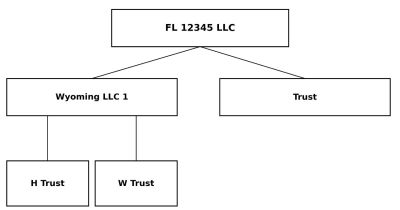
The Husband Trust & The Wife Trust
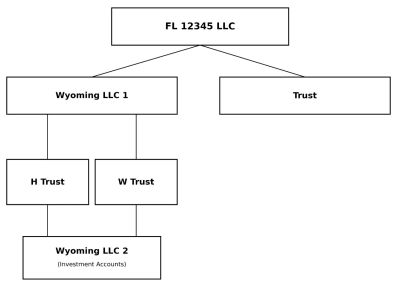
In this structure, ownership interests flow to the trusts. Each trust passes the couples interests to their children according to their terms without the need for probate administration. The husband has assigned his interest in Wyoming LLC 1 to the H Trust and the wife has assigned her interest to the W Trust. In this structure the H Trust and the W Trust each holds the interests assigned from Wyoming LLC 1. Wyoming LLC 1 and the Trust each own an interest in the Florida LLC that owns the rental property. Multiple layers and separate entities provide privacy and protection while limiting liability. We create trusts that are tailored to each client's specific objectives.
The Couple's Investment Accounts → Wyoming LLC 2
Wyoming LLC 2 is formed for the couple's investment accounts. A new LLC account is opened and the selected investments are transferred in kind. H Trust and W Trust are named as the beneficiary on the accounts. This strategy achieves privacy and protection. The members (owners) of the Wyoming LLCs are not listed publicly, further, the trusts are not recorded in public records, effectively hiding ownership of the investment accounts.
The Couple's House → H & W Trust
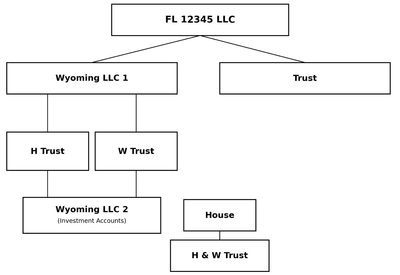
A separate trust, named the H & W Trust is established. The purpose of the joint trust is to hold the couple's primary residence and maintain their homestead protections. The deed is transferred to the H & W Trust. Public records will then reflect the owner of the property is H & W Trust, not the couple's names.
The Husband Trust and the Wife Trust each hold interests assigned from Wyoming LLC 1. Wyoming LLC 1 and the Trust are members of the Florida LLC. The Florida LLC owns the rental property. A separate Wyoming LLC 2 is formed for the couple's investment accounts and the interest is held by the H Trust and W Trust. The couple's homestead property is deeded to the joint H & W Trust.
The Layers
• The couple's names do not appear in any public filing, hiding ownership of their assets
• Rental Property → FL 12345 LLC
• FL 12345 LLC → Wyoming LLC 1
• FL 12345 LLC → Trust
• Wyoming LLC 1 → H Trust, W Trust
• Wyoming LLC 2 Investment Accounts → H Trust, W Trust
• House → H & W Trust
The Land Trust Structure
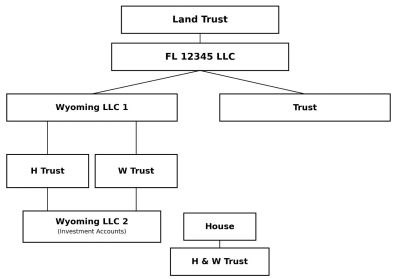
A land trust is often used in scenarios where a client already owns a property in their personal name and there is debt on the property. The land trust is established and the property is transferred to the trust. The land trust’s name and trustee's name appears on the new deed in the public record. To preserve anonymity, a nominee trustee is required. Clients can elect to have an attorney act as the nominee trustee to protect their privacy. The attorney is listed in public records, not the couple. The land trust can then be assigned to the LLC. A land trust combined with an LLC provides stronger asset protection. An LLC offers protection from creditors by shielding your assets from liability tied to the property. Please see the diagram below, which illustrates how the land trust is integrated into the structure.
Why use a land trust? A land trust is a well established privacy tool. Because the trust’s name appears on the deed rather than an individual’s, a title search or property records search will not reveal the couple as the beneficial owners. Legal counsel is required to evaluate and plan for your specific objectives.
• The couple’s names do not appear on the deed or in the county property records
• The land trust’s name is intentionally generic and non-identifying
• Beneficial ownership remains with the couple through the trust structure
Key privacy benefit: Property records are among the most commonly searched public databases. Creditors, plaintiffs’ attorneys, and data aggregators routinely search county records by owner name. A land trust breaks that chain, a search returns the trust, not the individuals behind it.

The Land Trust & Asset Protection Structure
Once the land trust is executed, a Florida LLC is created to hold the land trust. The Florida LLC is formed with Wyoming LLC 1 and the Trust as its members, reflected in the diagram. This positions the LLC as the entity that controls the land trust, and, by extension, the rental property. Any liability arising from the property flows to the LLC, not to the couple personally. The Florida LLC’s formation documents name the Wyoming LLC as the manager and the attorney as the authorized representative.
In this structure, all ownership interests flow to the trusts. Separate entities and multiple layers increase protection and limit liability. In this structure Wyoming LLC 1 and the Trust each own an interest in the Florida LLC that holds the land trust, which holds the rental property. The H Trust and W Trust each hold interests in Wyoming LLC 1 and Wyoming LLC 2 . The H & W Trust holds the couple's homestead property. This multi-layered asset protection strategy combines privacy-focused LLC structures and integrates trusts to facilitate transfer of wealth.
The Layers
• Rental Property → Land Trust → FL 12345 LLC
• FL 12345 LLC → Trust
• FL 12345 LLC → Wyoming LLC 1 → H Trust, W Trust
• Wyoming LLC 2 Investment Accounts → H Trust, W Trust
• House→ H & W Trust

Flavio Deming, Esq.
Flavio Deming, Esq.
Flavio Deming, Esq.
I am an experienced estate, business, and asset protection attorney licensed with the Florida Bar. My practice is dedicated to providing skilled guidance to protect wealth, preserve legacies, and secure peace of mind.
Our Mission
Flavio Deming, Esq.
Flavio Deming, Esq.
At Deming Law, our mission is to provide our clients with tailored services to ensure their assets are protected, and their wishes are honored. Strong, long-term relationships are the foundation of what we do.
Services
Flavio Deming, Esq.
Client Portal
We offer a wide range of estate, business, and asset protection services. Our services are tailored to meet clients' specific needs.
Client Portal
Flavio Deming, Esq.
Client Portal
Please click the button below to access the client portal and securely pay your invoice with LawPay. To pay by wire transfer, please call our office at (561) 344-3333 or email info@demingpllc.com to request our banking details.